:info: This article uses native name orderings (e.g., Matoi Ryuko instead of the westernised Ryuko Matoi), and contains spoilers for Kill la Kill.
Kill la Kill's Wardrobe of Authoritarianism
In discussions of one of my favourite anime shows: Kill la Kill, I often encounter claims that it depicts a struggle against fascism
. While the notion is far from universal, I think it is worth voicing my disagreement with. I want to diversify the discussion surrounding Kill la Kill. I hope to explain why I view this label as a poor fit for how we understand the anime, and what it means for the real world.
I. Defining fascism
To understand what is not fascism, we first have to define what it is. Fascism, like many ideologies, has no single concrete definition, but is rather a collection of characteristics that various fascist entities adhere more or less to. For the purposes of this, I will look into several definitions, and compile what is generally understood as such.
Wikipedia defines fascism as the following:
Fascism is a far-right, authoritarian, and ultranationalist political ideology and movement that rose to prominence in early-20th-century Europe [...] Fascism is characterized by support for a dictatorial leader, centralized autocracy, militarism, forcible suppression of opposition, belief in a natural social hierarchy, subordination of individual interests for the perceived interest of the nation or race, and strong regimentation of society and the economy.
Encyclopædia Britannica's explanation is as such:
[...] Although fascist parties and movements differed significantly from one another, they had many characteristics in common, including extreme militaristic nationalism, contempt for electoral democracy and political and cultural liberalism, a belief in natural social hierarchy and the rule of elites, and the desire to create a Volksgemeinschaft (German: “people’s community”), in which individual interests would be subordinated to the good of the nation. [...]
Taking these, with my own studies, I compile my definition.
For the purposes of this essay, fascism, as an ideology which generally:
- Subserves all individuals to its own cause.
- Exterminates its opponents.
- Exerts total governance over every aspect of life.
- Rules through terror and fear.
- Promotes the supremacy of the nation, and/or
race
over all others, the purity of therace
Cassowary Colorizations, CC BY 2.0, via Wikimedia Commons
.png)
II. Authoritarianism
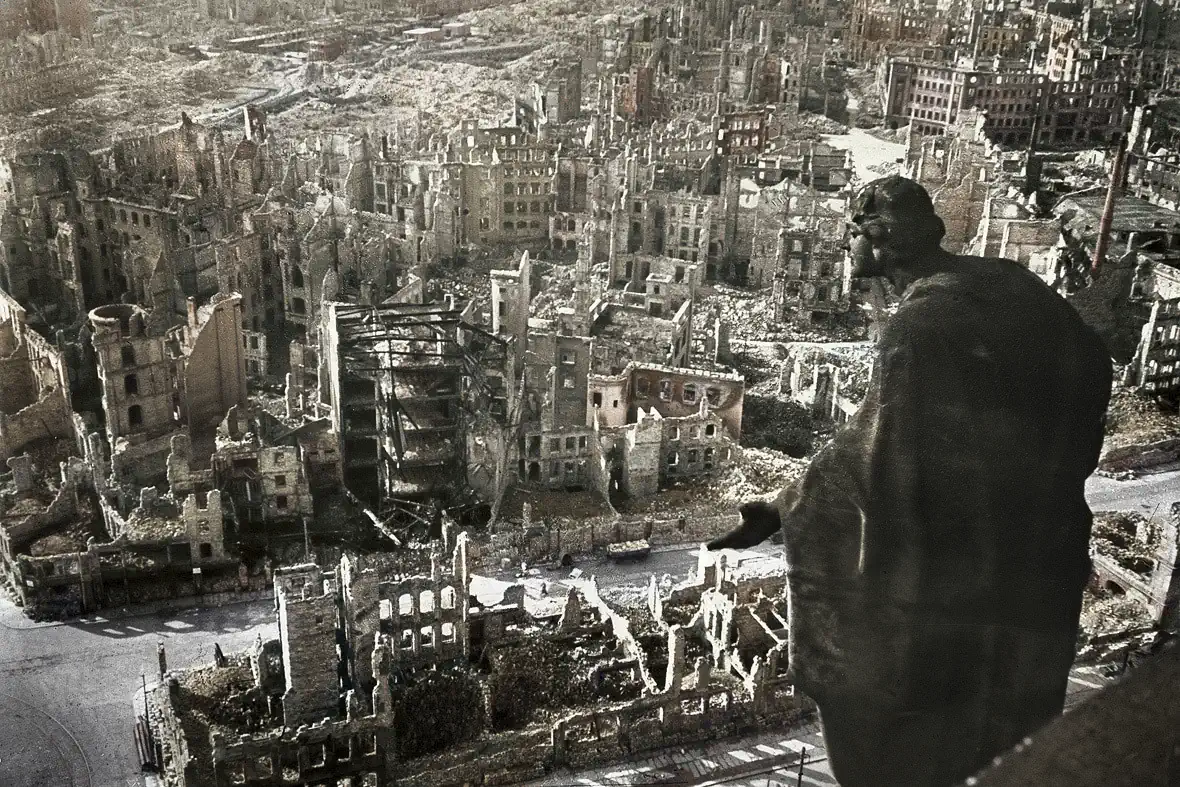
To present my case, I drew from the 20th century history of my homeland, Hungary.
After the end of the First World War, the Austro-Hungarian dual monarchy had shattered to pieces. The Hungarian part of the empire saw its borders redrawn in the 1920 treaty of Trianon. This was viewed by many Hungarians as a tragedy, and was considered unacceptable, which dictated the Hungarian foreign policy for more than two decades.
The nation was economically and militarily crippled, and its politics became more extreme. After a brief Communist revolution in 1919, which attempted to reclaim lost territories, the country was ruled by regent Horthy Miklós for the foreseeable future. In 1920, Hungary passed a Numerus clausus law, limiting the amount of minority students in higher education. Restrictions would worsen as world marched towards the war.
In the 1930s and '40s, Nazi Germany could exploit Hungarian irredentism perfectly, courting Hungary with the return of its lost lands through the Vienna Awards.

Magyar Világhíradó (Hungarian World News, 1941)
Eventually after internal conflicts, and a bombing attack, Hungary joined the Axis Powers, and the war itself, which proved devastating. Following the suicide of the prime minister, Hungary took part in the invasion of Yugoslavia, and the subsequently the excesses of the Royal Hungarian Army caused more than 3000 casualties in Novi Sad. the Axis powers faltered, and Horthy looked for a way out, Germany invaded Hungary, and established a fascist puppet government which brought the horrors of the Holocaust home. Soviet troops in the same year invaded the country, resulting in it becoming a battlefield.
Magyar Világhíradó (Hungarian World News, 1944)
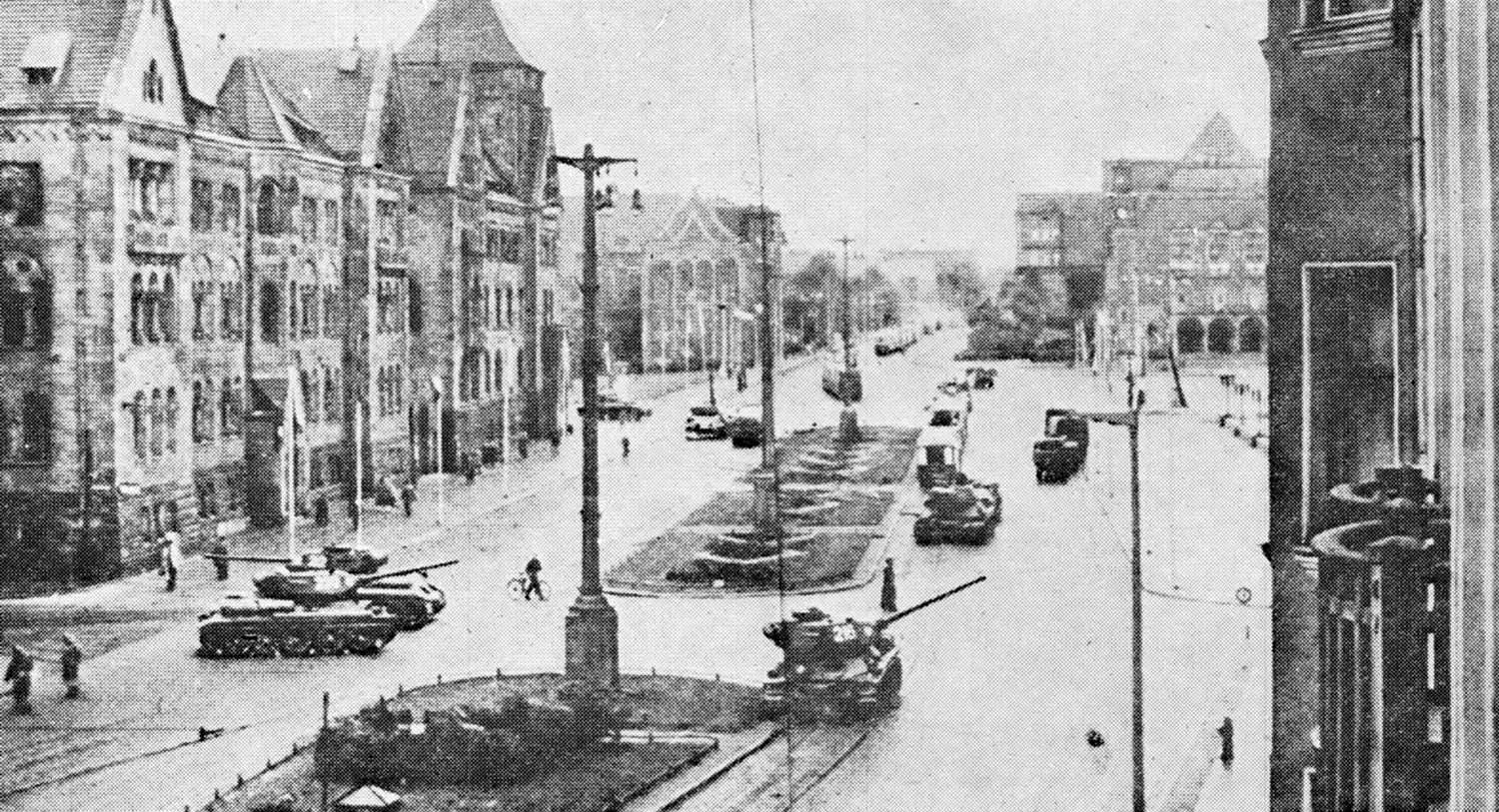
After the end of the war, Hungary slowly fell into a communist dictatorship under Rákosi Mátyás. Private property was forcibly collectivized, and the State Protection Authority (ÁVH) was founded, headquartered at the former office of the fascist Arrow Cross Party. Opposing political parties were banned, and industrialization was heavy-handedly forced. A cult of personality of Rákosi was promoted. Rákosi's policies created food shortages in what was once the bread basket of the Austro-Hungarian Empire. After the 1956 revolution, the new regime under Kádár János was more moderate, however until the very end of the 1980s, people did not enjoy basic liberties that we take for granted today.
If we plot the experiences of communism on a list, then communism:
- Subserves all individuals to its own cause.
- Exterminates its opponents
- Exerts total governance over every aspect of life.
- Rules through terror and fear.
- Promotes class struggle, rule of the proletariat, the working class.
We find that they have a lot in common. What differentiates fascism and communism is the narrative they employ, the populist idea that they claim to strive for.
We can find the unique elements of both ideologies if we subtract those shared by both. We find that fascism:
- is authoritarian
- Promotes the supremacy of the nation, and/or
race
over all others, the purity of therace
While communism:
- is authoritarian
- Promotes class struggle, rule of the proletariat, the working class.
See page for author, Public domain, via Wikimedia Commons

With this foundation laid, we can finally turn back to Kill la Kill.
III. Kill la Kill
When someone talks about fascism in Kill la Kill, they often mention either of three things. First, a scene which discusses Hitler's rise to power at the very start. Then, Satsuki's Fear is freedom!
speech, and lastly: Ragyo. Let's address them each.
The first scene opens with Mikisugi Aikuro talking about Hitler's rise to power in Nazi Germany. Some fans take this and extrapolate that it is going to be an important theme of the show. I agree that it is important, but I'd like to provide an argument for why the mention of the Nazi party is not the root of the depicted systems. Let me ask a simple question, what is the most well-known authoritarian regime? What comes to mind first? For many people, across the world, that would be Nazi Germany, and the Third Reich
. If the show would have mentioned any other system, there would have been a risk that the audience would have not been familiar with, and not caring enough to discover it, or in the case of certain countries, be even sympathetic to it. Nazi Germany is universally understood as bad. To me, the mention is a shorthand for authoritarianism.
It is often cited that the creators were inspired by the loanwords of fashion
(ファッション) and fascism
(ファシズム) which are similar, and that conquest
(征服) and uniform
(制服) are homophones. (Words which sound the same but carry a different meaning)
I think it is also worth noting that these are coincidences of language which inspired Nakashima Kazuki, Imaishi Hiroyuki, and the rest of Trigger. The seed changes a lot until it grows into a magnificent tree.
Satsuki's speech "Fear is Freedom, Subjugation is Liberation, Contradiction is Truth! [...]" is an obvious reference to George Orwell's 1984. However, 1984 doesn't really present any ideology. English Socialism is always whatever the party wants it to be, and it lacks any principled foundation beyond the complete and utter subservience of everyone towards the interest of the Party and Big Brother. The fascism label does not stick here either.
u/MeganeReviews on r/anime posted what is in my opinion a far more interesting interpretation of the speech, reading it as a foreshadowing of the events to come, which rounds out the character of Satsuki much better in my personal opinion.
The true meaning behind Satsuki Kiriyuin's speech
So her iconic speech is -:
"Fear is Freedom, Subjugation is Liberation, Contradiction is Truth! Those are the facts of this world, and you will all surrender to them! YOU PIGS IN HUMAN CLOTHING!"
This speech actually has a lot of meaning from her life's perspective. She was actually making sense in an unbelievably subtle way.
Fear is Freedom - Fear of her Mother and Life Fibres, would eventually lead her and Honnouji academy to Freedom.
Subjugation is Liberation - By Subjugating themselves to Ragyo, they made their revolution invisible, which allowed for Liberation.
Contradiction is Truth - Anyone who contradicted Ragyo, or even herself during this time was speaking the Truth.
I even love how she changed "you pigs in human clothing" in EP1 to "you pig who fawns over clothing" in EP18 while addressing her mother.
She's truly a wonderful character.
What makes fascism distinct from authoritarianism is the cruel principle which relates the value of humans to one another based on superficial traits, ethnicity, skin colour, or beliefs.
I view Kiryuin Ragyo as the strongest argument FOR why Kill la Kill is about fighting, especially fascism, but even it falls flat for me. Ragyo lost her own humanity, and acts as a false deity, but more on that in a different essay. She is the spokesperson of the Life-Fibers, which are extraterrestrial beings. It is unknown whether Life-Fibers exhibit consciousness in a similar way to how humans do. Senketsu does, but he is one of a kind. Even if most do, they lack the racist/nationalist motivation. Fascism employs social-Darwinism to state a gross hierarchy among humans, which Life-Fibers aren't, and cannot be a part of.
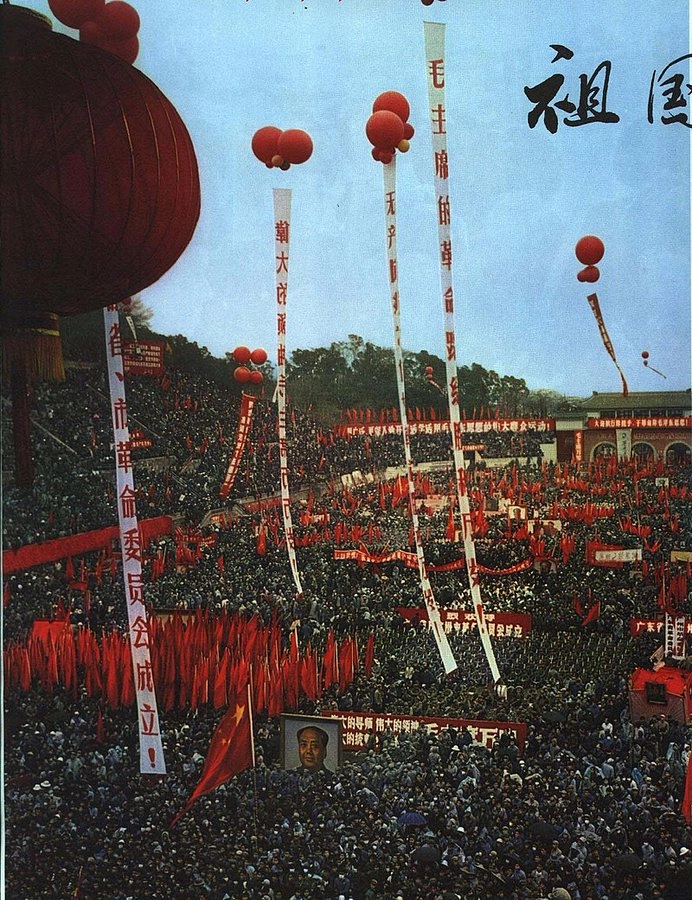
One aspect that isn't often mentioned is the First Naturals Election. I believe this is analogous to Chairman Mao's Cultural Revolution in the People's Republic of China. The Cultural Revolution, in essence, was controlled chaos, in an attempt to purge Communist China of the Four Olds: old ideas, old culture, old customs, old habits. It mobilized the masses, to break down the current system, to re-construct another one. Red guards would be formed across the country, and they would basically in very simplified terms be rampaging across China, fighting the old fours. This in a way pitted Chinese people against one another, while the Communist Party would watch the chaos unfold from above. Education would be suspended, and teachers representing the old traditionalist ideals would be denounced, or publicly shamed. Satsuki does something similar when she announces the First Naturals Election. The rules of Honnouji Academy are effectively suspended, and students may fight one another without constraints. Presumably Honnouji Academy didn't hold any classes during the Naturals Election either. Later in the PRC, the authorities lost control over the situation, and abolished the Red Guards, at times relying on the People's Liberation Army to reinstate order.

If we make a table of the different characteristics, we get the following:
| Aspect | NSDAP | CPSU | Honnouji |
|---|---|---|---|
| Demands Subservience | Yes | Yes | Yes |
| Extermination of Opponents | Yes | Yes | Yes |
| Seeks Total Control | Yes | Yes | Yes |
| Institutionalised Discrimination based on immutable traits | Central | Occasionally (Holodomor) | No |
| A belief in ethnic superiority | Yes | No | No |
| A belief in the rule of the proletariat | Socialist in name | Yes | No |
| Rule through fear | Yes | Yes | Yes |
| Economic Control | Total | Total | Total |
Satsuki's governance of Honnouji Academy was not in service of any nation, or ethnicity, but a covert plan to prepare an uprising against the threat of extinction posed by Ragyo. Her ways were autocratic, and cruel which she could rightfully be criticised for, however applying the fascist label would be simply wrong. Her motive had nothing to do with far-right extremism. Her system was not exclusionary, and the ladder of ascension was clear. Even if difficult, the requirement for advancement was combat skill, not skin-colour or an ethnic background. Ryuko could climb up in Satsuki's system, even though she opposed it. Make no mistake, her actions are not free from critique, but the adjective being used matters.
The conquest of the other schools trough the Tri-City Schools Raid Trip expands on the details of the world. While these could have been assumed prior to this, the existence of several semi-independent schools functioning as states, some of them with their own currency, pretty much confirms that Japan is likely without a central government, or one that is too weak to maintain order. This reflects the pre 17th century Japan, divided among the warlords and clans of their respective regions. Satsuki is not expanding the borders of Japan in continental Asia, but taking one of the last steps in unifying a country shattered into pieces. By the end of the arc, she also reveals that her true intent was to destroy the Nudist Beach base situated in Osaka.
While the prospect of unification, and re-unification are terms associated with nationalism, the gap between it and fascism is far too wide to use the terms as interchangeably. If seeking national unification were enough to label something as fascist, then what label belongs to the Hungarian Soviet Republic, and it's war against Czechoslovakia and Romania, or Mao's People's Republic of China and her (China) claim to the island of Taiwan, (The Republic of China), Tibet, and Xinjiang? Additionally, to further decouple unification from fascism: The American civil war. While I am not very knowledgeable in the history of the United States, I believe is fair to say, that the civil war was followed by an act of reunification, and an end to an entire category of oppression, and belittlement. While the issues were not solved in their entirety, it was a significant step towards equal rights.
Ragyo presents a more compelling case for a fascist antagonist, however that belittles her intent of the cosmic exploitation. She does not see humanity as any more than a resource tile to be harvested. She has no ambition of reclaiming lost territories, or elevating a group of people above all others. She is merely using authoritarianism, concentrating power beneath her in service of the alien parasites known as the Life-Fibers, which have no concept of nation.
Kill la Kill borrows elements from various authoritarian systems. This does not make it any less powerful, for authoritarianism is a form of governance, not an ideology.
Both Ragyo, and Satsuki lack the ideological drives which could specify their rule as fascist
.
It is intellectually dishonest to conflate Satsuki's rule with totalitarian regimes that intentionally murdered millions of people in a perverted attempt at pursuing a national rebirth
as a dominant nation of the world, at the cost of all others, with a complete disregard for their life. Satsuki in contrast, wanted to serve humanity's survival.
Uniforms, and large set pieces are sometimes brought up as well. It is important to recognise however, that these are not exclusive to fascist systems. Grandiose events and stylish fits are tools in every authoritarian's toolkit: From the jewels and coronations, through rallies in Hugo Boss uniforms all the way to Zhongshan suits in front of ballistic missile carriers on Tiananmen Square, the symbols of power and monolithic order are employed by all who seek to project control. This also includes democratic systems, and therefore this alone does not make any country inherently authoritarian, but the scale is far more prevalent in authoritarian states. Simply look up a Chinese, Russian, or North-Korean military parade, and place it next to a Nürnberg rally.
all fascism is authoritarian, but not all authoritarianism is fascism.
IV. Why it matters
First and foremost, I care about this, because I like Kill la Kill, and I like history. I do not claim to be well-versed in it, as there are always new things and details to learn. I also encounter a lot of memorials, and buildings full of bullet holes remaining from the 20th century.
Over the past couple decades, abuse of fascism as a label has inflated and hollowed its meaning to be effectively meaningless. It is far too quickly thrown around to denote the absolute worst of the palette. It is difficult for an increasing number of people to take the threat of fascism seriously, for it has been misapplied. In many cases, the label simply does not stick, and the one being accused may simply brush it off. Ragyo is a far more scary and serious villain if you describe her intent to consume all of humanity in service of the Life-Fibers, destroying the planet Earth and all its life, than if you simply deemed her a space fascist.
To fight against authoritarianism in the modern era, it is far more useful to formulate concrete grievances. It is easy to deny subscribing to an ideology of hate, but far more difficult to deny concrete, provable actions. Stealing public funds, mismanaging institutions, or neglecting parts of the population from making decisions. A mention of these should be the tool of the citizen, for authoritarianism adapts, and the tools of the past to combat it have lost their edge.
TLDR
Fascism requires a foundation of perceived ethnic, or national supremacy.
Neither Ragyo, nor Satsuki have much to do with any of these concepts.
Citations:
https://en.wikipedia.org/wiki/Fascism
https://www.britannica.com/topic/fascism
https://nat2012.nkp.hu/tankonyv/tortenelem_12/lecke_02_014
https://erettsegi.com/tetelek/tortenelem/a-rakosi-korszak/
https://www.reddit.com/r/anime/comments/64id05/the_true_meaning_behind_satsuki_kiriyuins_speech/
https://en.wikipedia.org/wiki/Cultural_Revolution
(All 5 accessed on the date of writing.)
Written:
Updated: